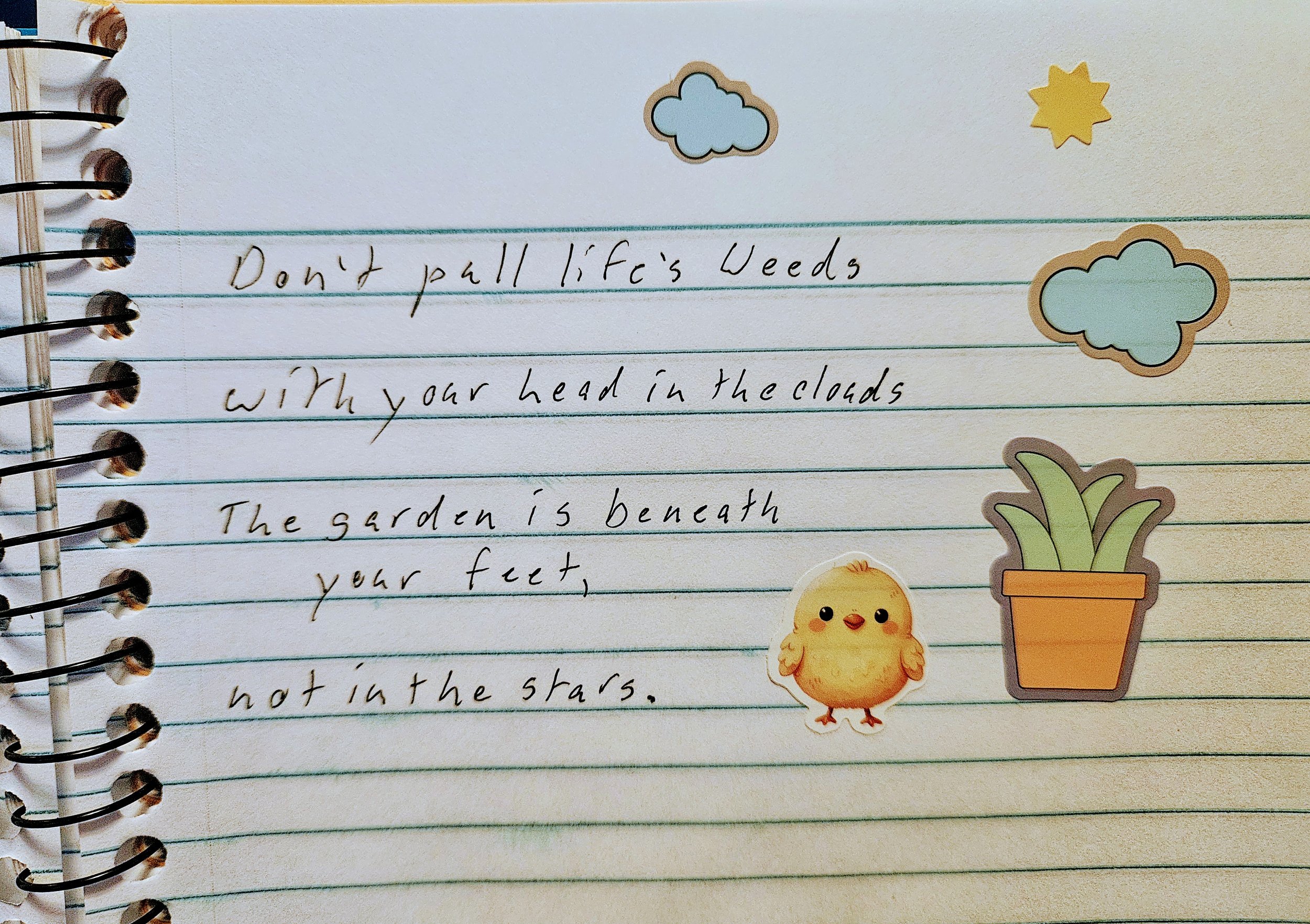
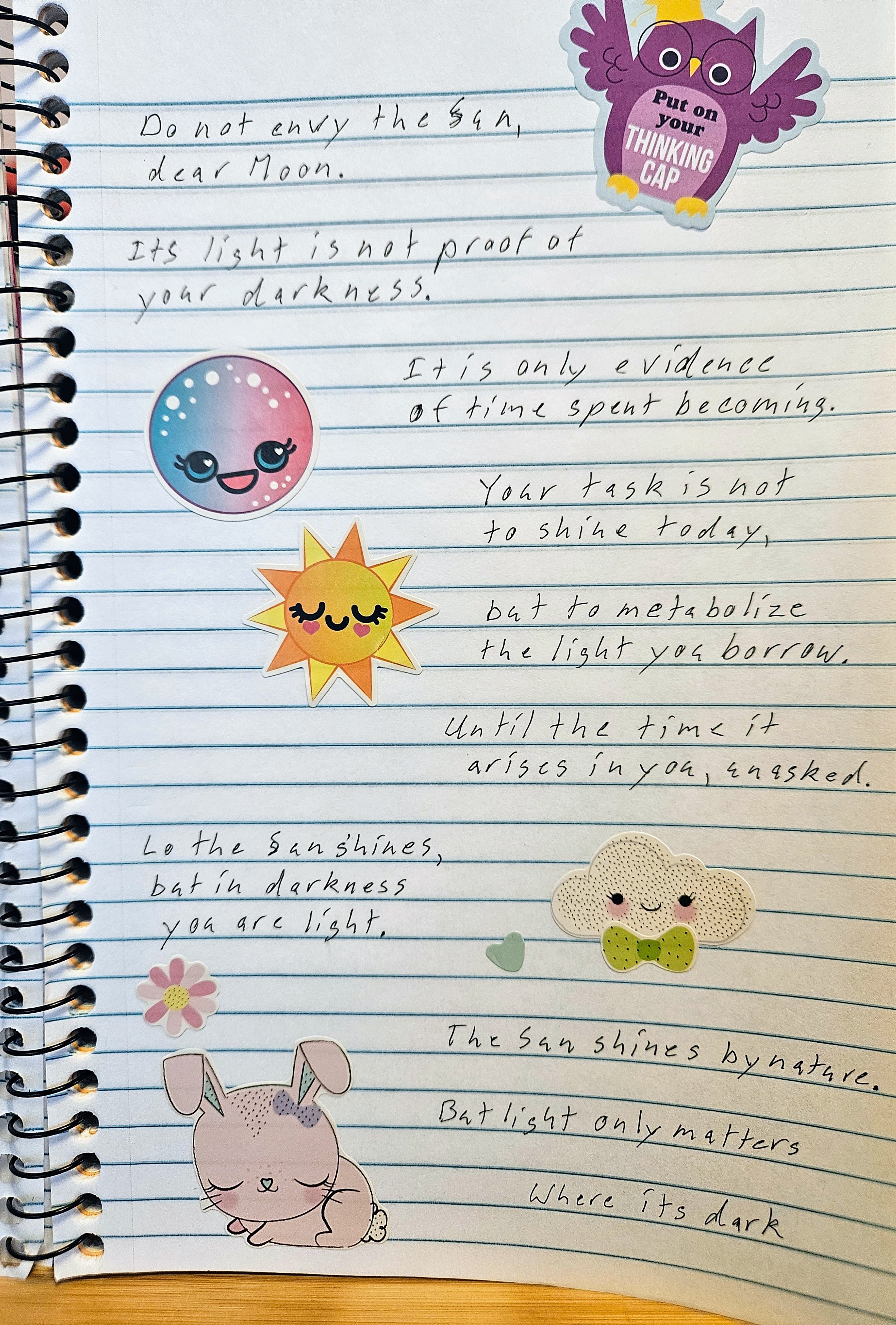
A Learner's Journaling Journey
My journaler's journey began around the turn of the century. My life and mental health felt like they were collapsing. I only had simple words to describe my experience: sad, mad, confused.
I was hospitalized.
It was suggested journaling could help, and I began writing. I poured my depression, anger, hopelessness, and struggle onto the page.
With no boundaries, my journaling turned into an archive of rumination. I would write my woes, reread them, agree with myself, and write again to reinvent them in my current image.
There is no one right way to journal, merely right ways; I, however, had stumbled on a wrong way for me at that time.
I saw the spiral and quit.
I continued learning, taking notes, workbooks, trying to understand.
I found time to write longer pieces and express my creativity, but writing about my experience brought up fear of spiraling.
I rediscovered expressive writing when I started my education. In an introductory writing class, I decided to write about that hospitalization years before.
My heart was heavy at the end of the story. Closing the narrative with the closing of the hospital doors left me at a dire end. As I reflected on those difficult years, I wasn't that same person, and instead of closing with being “hospitalized,” I was “committed.” The doors closing gave me a double meaning that brought me hope.
As the magnetic doors locked, I was committed. To a hospital, yes.
But being committed meant something more with eight lived years of perspective. I'd shown a commitment to one more day, over and over.
Writing that account of one of the most crushing pivot points in my journey allowed me to really write, to journal again.
I began to write about experiences I struggled explaining to others.
Thinking on paper had rejoined my life as a growing habit. Like most things good for us, it was difficult to start again, and again, and again… One list, one paragraph, one day at a time, my life and mental wellness became more manageable. I began noticing improvements monthly, then weekly.
I was less stressed, more productive, more capable of handling the challenges of my mind.
I'd traveled from days of being shut down and overwhelmed by my illness to making meaningful progress on my goals while living with these difficulties.
Discovering change in myself, I resolved to understand what I knew about change, and to learn to express it to others. I took the first steps on the path of mentoring that I talk about in my introduction. I took steps to volunteer in my community, seeking resources to learn from.
I studied mentoring and the 4 People Within with the Sumiloff Academy.
Simultaneously, I studied Enneagram with the Enneagram Prison Project’s “9 Prisons, 1 Key” and “Path to Freedom.” Later, I studied with and got certified in the Narrative Enneagram tradition.
I was a mentor.
Next, I flowed from being “a journaler,” into someone who studies journaling.
Learning from YouTube, finding books about journaling, I began to explore the benefits of writing down my thoughts and feelings, rather than simply doing what I “should.”
Based on recent and past interests, I made a list of the things I enjoyed learning. It was built on the guilt of books yet to be read, and the optimism of new insights. I assembled a document I called “Journaling, Self Expression, and the Rhetoric of Self.” I had created an in-depth study plan that spanned psychology, philosophy, writing, history, and spirituality.
I thought, what if I actually pursued this for credit and a degree?
I reapplied to Eastern Oregon University.
I am now pursuing this education at EOU as a B.S. in interdisciplinary studies focused on psychology, philosophy, and journaling.
I continue to do mentoring and peer support, growing into the identity of a journaling coach.
As I follow this path of “Journaling, Self Expression, and the Rhetoric of Self,” I invite you to join me.
Begin. Take the next step on your journaling journey.